

Farmers face 2027 irrigation bans as drought fears deepen
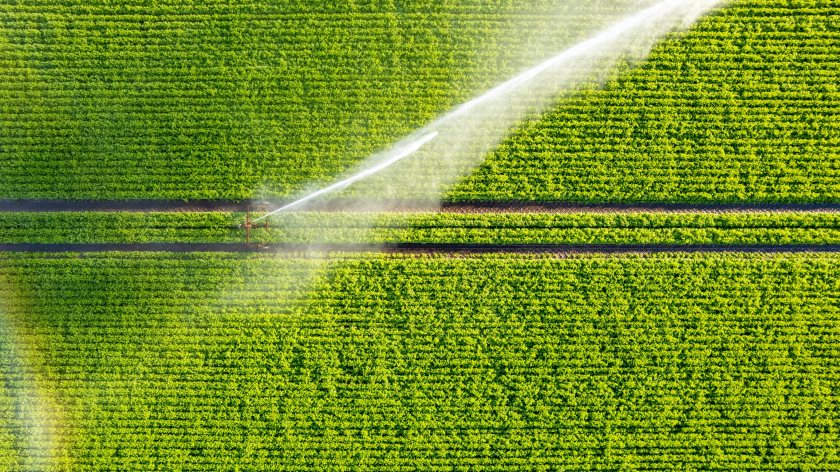
Farmers in England could face outright bans on spray irrigation next year if winter rainfall remains well below average, the Environment Agency has warned.
A new government assessment, published on Monday (2 November), raises concerns that agricultural reservoirs may fail to refill before spring 2027, leaving growers facing serious water shortages.
The warning comes as 82% of England remains in drought, with the Environment Agency estimating that at least 120% of average rainfall will be needed over the next six months for the country to emerge from drought by spring.
The latest assessment examines three winter rainfall scenarios, based on 100%, 80% and 60% of the long-term average, to determine whether agricultural reservoirs can recover before the next growing season.
Under the 80% rainfall scenario, reservoir refill prospects are considered poor in East Anglia, the West Midlands, Devon and Cornwall.
The agency warns that emergency Section 57 restrictions, which limit water abstraction for spray irrigation, could be introduced in some catchments during the 2027 irrigation season.
The outlook becomes considerably more serious if winter rainfall falls to just 60% of average.
Under that scenario, many agricultural reservoirs could remain insufficiently replenished by spring, with widespread abstraction restrictions limiting farmers' ability to secure irrigation supplies.
Vegetable growers could face particular difficulties, while dry soils may create further challenges for establishing spring-sown crops.
The Environment Agency warns of a significant risk of emergency spray irrigation restrictions, potentially including outright bans during the growing season.
The findings follow earlier warnings that nearly 700 water abstraction restrictions remained in place across England in late October, with some growers already considering reducing vegetable production next year.
Livestock farmers also face growing concerns over forage availability, with another dry spring potentially restricting grass growth and increasing feed costs.
Many producers have already drawn on winter feed reserves following poor grass growth during the summer, leaving businesses vulnerable to further shortages.
The situation has prompted warnings for livestock farmers to assess forage stocks and prepare for possible winter feeding pressures.
Mark Betson, water resources specialist at the NFU, warned that the effects of this year's exceptionally dry conditions could extend well into 2027.
"The exceptional summer of 2026 has created a water deficit which will be difficult to make up over the winter."
He urged farmers to prepare for increased water shortages, stressing the importance of accessing supplies when available and planning ahead for future irrigation needs.
The Environment Agency has already introduced temporary flexibility for eligible farmers to refill on-farm reservoirs, although the measures do not apply in every catchment.
Farmers are now being encouraged to review abstraction licences, assess their water requirements and contact local Environment Agency teams where reservoir refilling is proving difficult.
Growers are also being advised to consider water trading arrangements and join local water abstractor groups to strengthen their resilience.
The government has announced up to £15 million in funding to support the construction of on-farm reservoirs, helping agricultural businesses improve their long-term water storage capacity.
However, irrigation bans are not inevitable. Under an average rainfall scenario, most agricultural reservoirs are expected to refill sufficiently before spring, although some areas could still face local restrictions.
A further Environment Agency irrigation outlook is expected at the end of February 2027, providing a clearer picture of the risks facing farmers ahead of the growing season.